
11 May 2020
HealthManagement.org | The Journal
Dr Eugene Fidelis Soh,
CEO of Tan Tock Seng Hospital and Central Health in Singapore
There is no crisis to waste. It is important we learn as we do, and not just learn after it is done
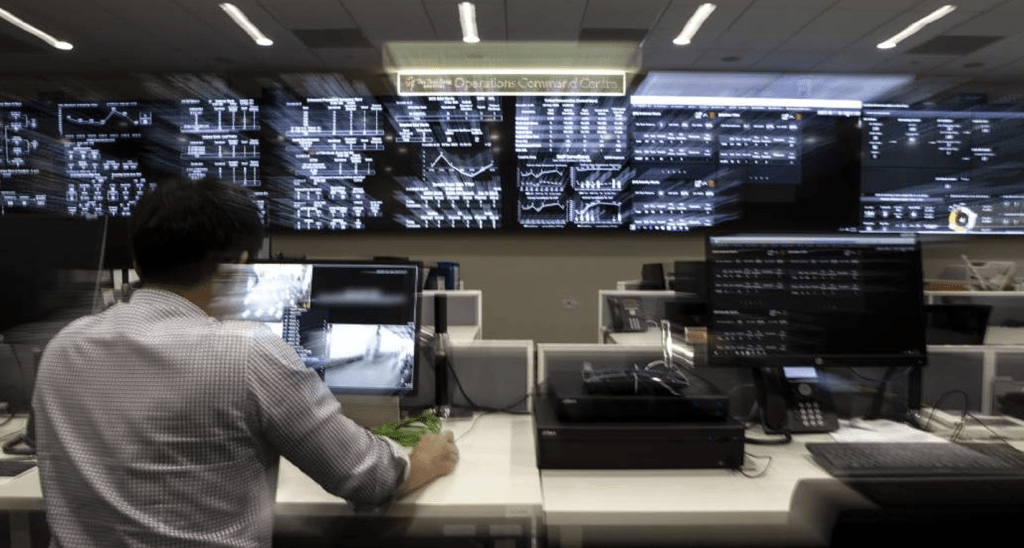
Tan Tock Seng Hospital, a large multi-disciplinary public hospital in Singapore enters into the future of Hospital Operations with Command, Control & Communications (C3) capabilities at its new Integrated Operations Command Centre.
On 22 Jan 2020, Singapore raised its Disease Outbreak Response System Condition (DORSCON) (Singapore Government 2020) level from green to yellow, in the face of the increasing number of novel coronavirus (COVID-19) cases linked to China. Two weeks later on 7 Feb 2020, it was raised to orange, the second highest level of alert on the back of a few local cases without any links to previous cases or travel history to mainland China.
Tan Tock Seng Hospital (TTSH) was at the epicentre of Singapore’s outbreak response to COVID-19. It was back in 2003 that the hospital was also designated the SARS hospital in Singapore then. Lessons were learnt from SARS in 2003 and H1N1 in 2009 and these lessons helped us to develop a state-of-the-art 330-bed facility for Infectious Diseases – the National Centre for Infectious Diseases (NCID). NCID was officially opened in September 2019 to always be prepared for a containment strategy in the event of another outbreak. The plan was for the main hospital to support and augment NCID with manpower and resources, and transfer existing patients back to the main hospital to free up capacity for outbreak response. This was to be tested for the first time during this outbreak.
Read more at HealthManagement.org
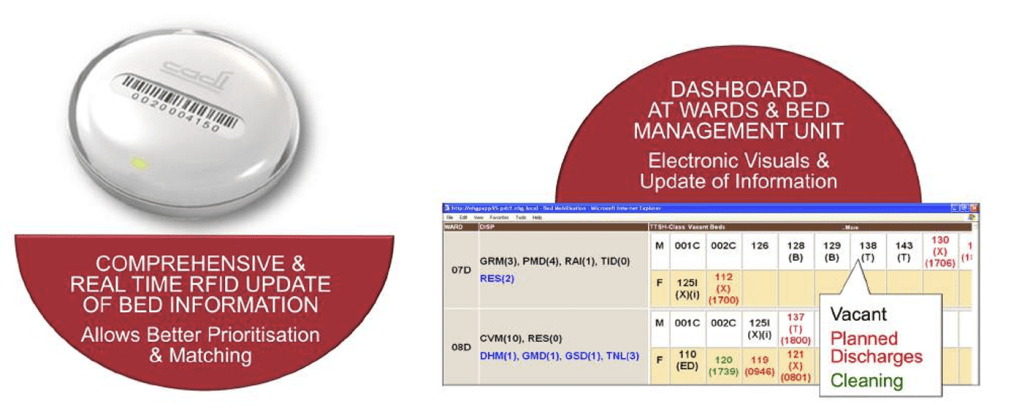
In 2008, we implemented a Real-Time RFID-Tagging System, which allows us to automate admission and discharge workflows, and identify the location of patients. This provided visibility of beds in our system. When a patient is admitted, he is tagged with an RFID tag and his information is actualised automatically on the ward’s dashboard, replacing the old practice of manual and at time inaccurate updates of the ward census on a whiteboard. The system enables the location tracking of our patients even as they go for their tests, scans and procedures outside the ward. It greatly facilitates coordination There is no crisis to waste. It is important we learn as we do, and not just learn after it is done stacking up new technologies and redesigning our workforce, we had taken a deliberate and systems-based approach to innovating our hospital’s operations, while building a collaborative culture across our clinical and operations staff
Read more at HealthManagement.org
In 2011, we developed and introduced the Artificial Intelligence Bed Management System (AIBMU) to provide rule-based decision support on bed allocation based on priority and matching. There are 345 rules to prioritise and match patients to beds, which make the task of assigning beds beyond the ability of the human mind. Prioritisation rules were based on clinical triaging guidelines, established in consultation with clinicians, while matching rules take into account factors such as class of wards, gender, and specialty requirements to ensure operational efficiency. As a result, our AIBMU calculates and allocates the best available bed options in order to best match the patient’s requirements and to ensure clinical prioritisation for urgent cases.
WHAT IT’S ABOUT
- TTSH was at the epicentre of Singapore’s outbreak response to COVID-19.
- COVID-19 was the first test of capacity for outbreak response.
- The new C3 system provides real-time visibility, flow management and resource optimisation for better management decisions.
- Healthcare crises are a valuable opportunity for learning on the spot.
- C3 frees nursing staff from administrative tasks so they can spend more time with patients.
Read more at HealthManagement.org
 Cadi Scientific ~ Solutions Designed for Healthcare